
The Missing Link Between PR and Sales
One of the conversations we (and most PR teams for that matter) have quite regularly with business owners goes something like this:
“We’ve got a sales team. Why do we need PR?”
It’s a fair question. After all, sales brings in revenue. PR builds awareness. They sound like two completely different disciplines. But the reality is that they’re far more connected than many businesses realise.
Good PR doesn’t replace sales. Nor should it. What it does do is make sales easier. It helps create trust before a salesperson ever picks up the phone, sends an email or walks into a meeting.
And in today’s business environment, that matters more than ever.
The first meeting often happens online
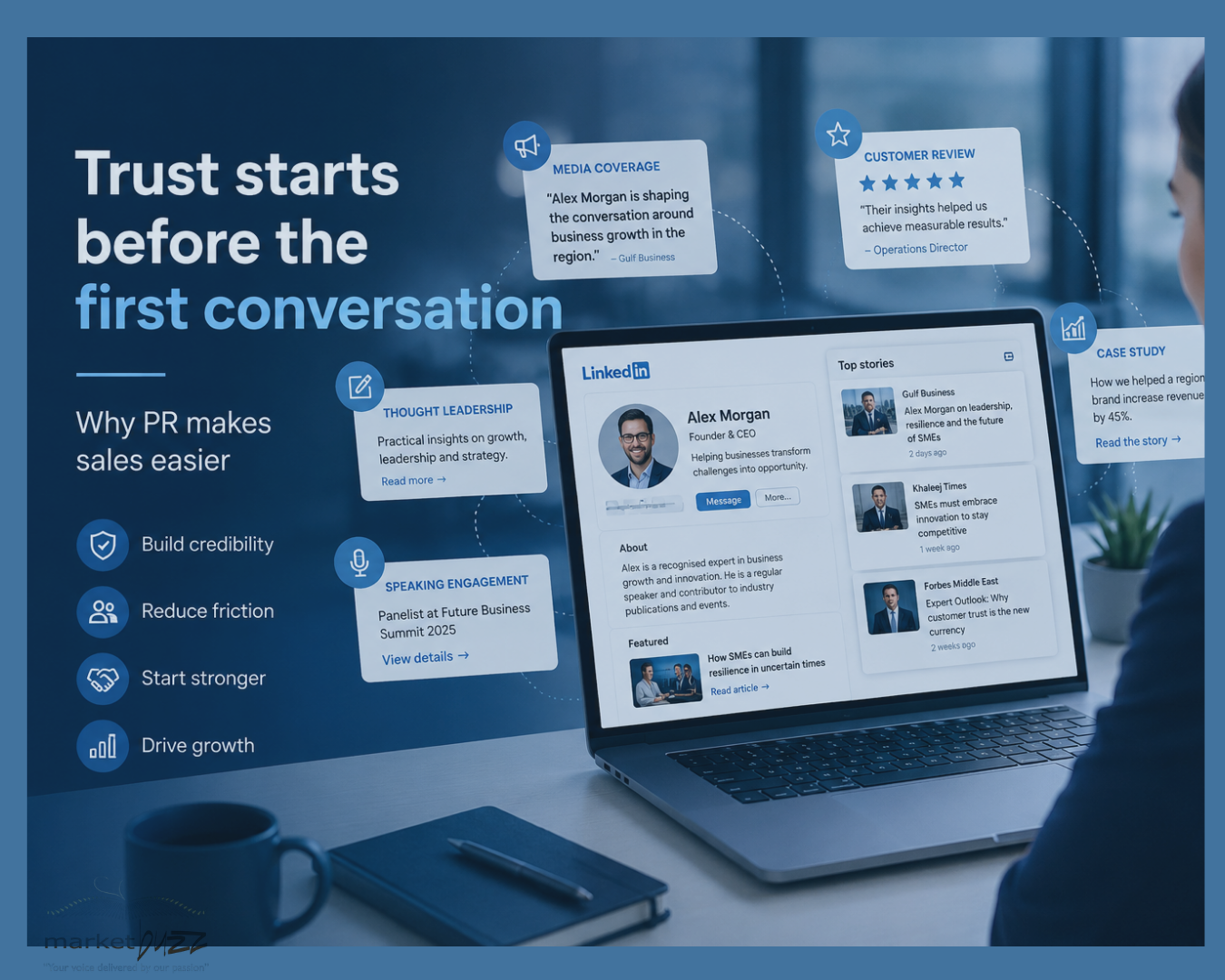
Think about the last time you were considering a new supplier. Chances are you didn’t wait to speak to them before forming an opinion. You probably searched for their website, looked at their LinkedIn page, read about the leadership team, checked whether they had appeared in the media, looked for customer reviews or searched for examples of their work.
Your prospects are doing exactly the same thing.
Long before your sales team has the opportunity to explain what makes your business different, people are already deciding whether you’re credible enough to talk to.
That’s why reputation has become part of the sales process.
For founder-led businesses, it’s even more personal. Buyers often place as much trust in the founder as they do in the company itself. If they can see experience, consistency and expertise, they’re already starting the relationship with confidence.
Trust removes friction
One of the biggest challenges in sales isn’t explaining what you do. It’s overcoming uncertainty.
Can this company deliver?
Will they understand our business?
Are they experienced enough?
Can we trust them?
Every positive piece of communication helps answer those questions.
A thought leadership article shows how your business thinks. A media interview demonstrates that others value your expertise. A customer case study proves you’ve solved similar challenges before. Speaking at an industry event shows that you’re contributing to conversations within your sector, not simply promoting your services.
Individually, these may seem like small touchpoints. Collectively, they reduce hesitation.
Instead of starting every sales conversation from zero, your business now begins with a level of familiarity and credibility that makes the discussion much easier.
Buyers are doing more research than ever
This isn’t just anecdotal.
Research from the latest Edelman-LinkedIn B2B Thought Leadership Impact Report found that thought leadership influences not only decision-makers but also the wider group of people involved in purchasing decisions. These “hidden buyers” often research suppliers independently and help shape the final recommendation before the sales team even realises they’re part of the process.
In other words, your communications aren’t just influencing the person sitting across the table. They’re helping build confidence with everyone behind the scenes who has a say in the final decision.
That’s an important shift, particularly for SMEs competing against larger organisations.
You may not have the biggest marketing budget, but you can still build credibility by consistently sharing useful insights, demonstrating expertise and making it easy for people to understand what your business stands for.
PR gives sales something to work with
The best sales teams have a simple habit. Before every important meeting, they look for something useful to share with their prospects. It wasn’t a brochure or a sales presentation. It could be have been a recent article, an interview with the founder, a customer success story or a piece of industry commentary.
Why?
Because it changes the nature of the conversation. Instead of saying, “Here’s why you should trust us,” they are able to show it.
That’s exactly where PR adds value.
Every article, media quote, speaking engagement or customer story becomes another piece of evidence that supports your sales team. None of it sells on its own, but together it creates a stronger picture of your business.
Over time, that consistency becomes part of your reputation.
PR and sales work best together
Sometimes businesses ask how they can measure the return on PR.
It’s a reasonable question, but not always an easy one to answer with a straight line from media coverage to revenue. What you can often see, however, is a reduction in the effort needed to build trust.
Prospects arrive better informed. Sales conversations become warmer. The business spends less time proving credibility and more time solving customer problems.
That’s where PR delivers commercial value. Not because it replaces sales, but because it supports every stage of the buying journey.
One thing to try this week
Take one piece of PR activity from the last three months.
Perhaps it’s a media interview, a founder article, a customer case study or a LinkedIn post that generated good engagement.
Now ask yourself one question.
Where could this have helped a sales conversation?
Could it have been shared before a meeting?
Included in a follow-up email?
Used to answer a common objection?
Sent to someone who had stopped responding?
If the answer is yes, you’ve already started connecting PR with business development.
The more closely those two functions work together, the more your reputation becomes an active part of growing your business, rather than simply something you measure afterwards.