
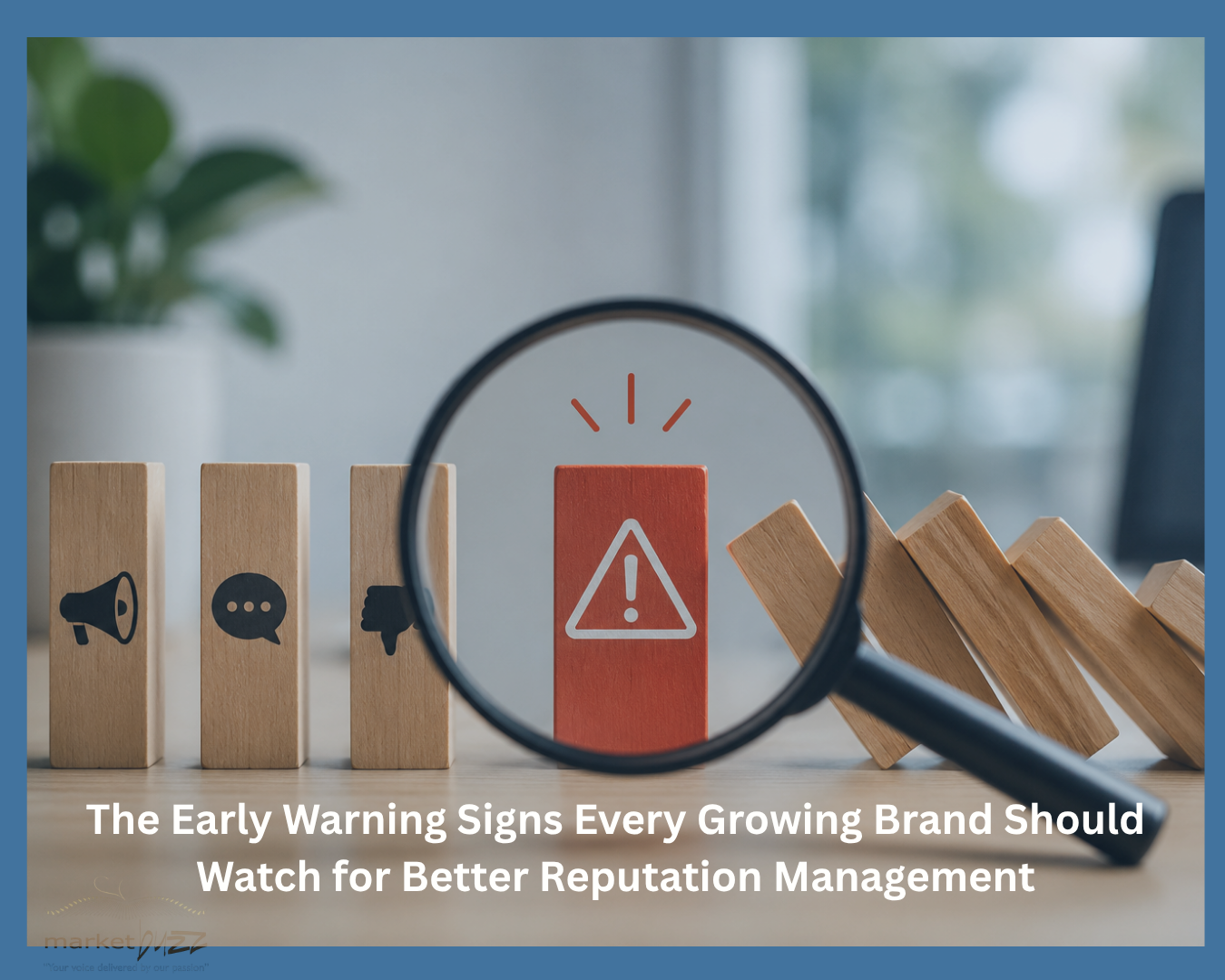
The biggest reputation problems rarely begin with a crisis. They start with small warning signs that are easy to dismiss. A handful of customer complaints. A change in the tone of online reviews. A journalist asking an unexpected question. On their own, they may seem insignificant. Together, they can signal that your reputation is beginning to shift.
For brands, this is actually good news. It means there is usually a window to act before an issue becomes visible everywhere. The businesses that use that window well are not the ones with the biggest budgets. They are the ones paying attention.
We have written before about why active listening is a PR essential, and reputation monitoring is that principle put into practice. The habit of noticing is what turns listening from a nice idea into something that actually protects your business.
The early warning signs
Recent industry research backs this up. Analysis from Brand24 points out that a sudden drop in positive sentiment can be a warning sign on its own, even if the overall number of mentions stays the same. In other words, it is not just about how much people are talking. It is about how the tone of that conversation is shifting underneath the surface.
Consumer insight firm Revuze makes a similar point. Reputation issues tend to start with small sentiment shifts long before anything becomes publicly visible, and a single complaint rarely means much on its own. It is the repeated complaints, about the same product, policy or experience, that deserve a closer look.
A few signals tend to show up before a full crisis does:
A steady rise in similar complaints, even if each one is minor. A shift in tone across reviews or comments, from neutral to something more pointed. Questions from journalists or clients that hint at a story forming, rather than one already written. Employees mentioning concerns internally that have not yet reached customers. A topic that keeps resurfacing in different places, from a WhatsApp group to a review site to a LinkedIn comment.
None of these need an immediate press release or communication. What they need is a decision maker who notices and asks why.
Where to actually look
The instinct is to check social media and call it done. That is no longer enough. GRC Report notes that reputation signals now live across marketing, sales and PR functions, often gathered for entirely different reasons and never pulled together into one place. The data is usually already there. It is just scattered.
For a growing brand in the Gulf, that means checking a handful of places regularly rather than one place obsessively:
Search results for your brand name and your founder’s name. Google reviews and any relevant platform reviews. Comments and DMs across the social channels you actually use. Recurring questions from clients or customers, the kind your team answers so often they stop noticing them. Internal feedback, particularly from client-facing staff who hear things before anyone else does.
This is not about buying expensive monitoring software. For most small and mid-sized businesses, a consistent weekly habit will catch far more than an occasional deep dive.
A weekly reputation scan
Set aside twenty minutes a week. One page. Five questions.
- What is being said about us in search results this week that was not there last week?
- Have review ratings or comment tone moved in either direction?
- Is any single complaint or question coming up more than once?
- Has anyone on the team flagged something they heard from a client?
- Is there a wider industry story this week that could touch us, even indirectly?
Keep the notes simple. A short line under each heading is enough. The value is not in the detail, it is in doing it every week so you can see change over time rather than guessing from memory.
Why noticing early is the real advantage
Reactive PR, the kind that responds after a story has already spread, will always have its place. But the businesses managing reputation well in 2026 have shifted their effort earlier, toward prevention rather than clean-up.
For a founder-led brand, that shift does not need to be complicated. It needs a habit. Fifteen minutes a week spent noticing small shifts will do more for your reputation than a crisis plan you only open once things have already gone wrong.