
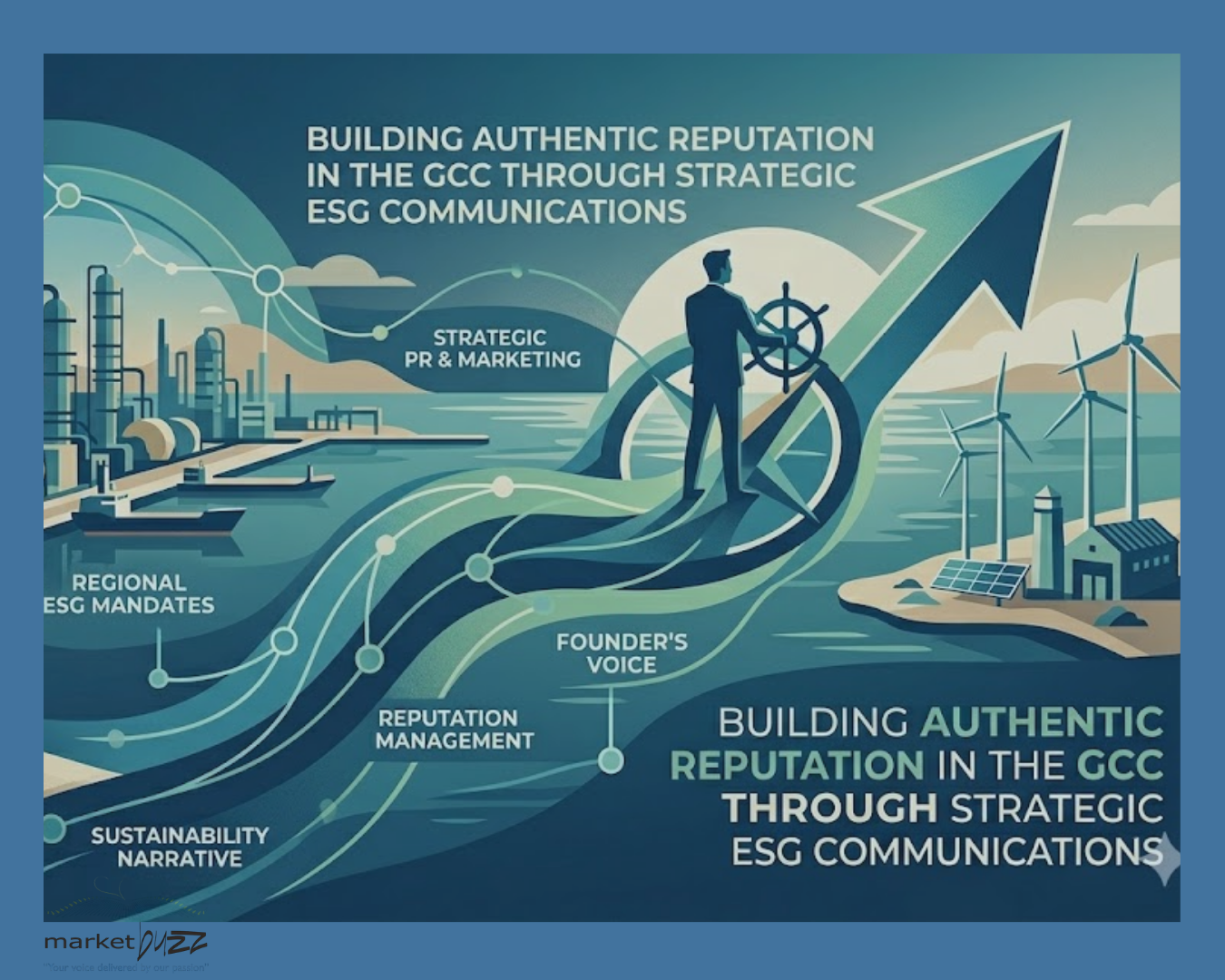
Navigating the media landscape in the Middle East requires more than just a compelling story. It demands a deep understanding of sectoral nuances, local audience expectations, and the evolving regulatory frameworks that govern how corporate messages are shared.
To help businesses effectively communicate across the region, we are sharing a series of industry-specific communications guides. Last week we tackled HealthTech, this week – ESG communications.
Environmental, Social, and Governance (ESG) frameworks are no longer optional sections in an annual report. Across the GCC, governments are increasingly embedding sustainability into economic policy, regulatory requirements, and long-term development plans.
For leaders in energy, manufacturing, and other industrial sectors, this creates a communications challenge. How do you meet growing reporting obligations while maintaining a credible and authentic corporate voice?
The answer lies in moving beyond compliance-driven communications and focusing on reputation building.
When sustainability communications become overloaded with technical language and reporting terminology, they often fail to connect with the people who matter most. Strategic communications should help bridge the gap between regulatory requirements and a meaningful business story.
Why Leadership Voice Matters
Companies in energy and manufacturing are often judged through metrics such as carbon emissions, waste reduction targets, renewable energy adoption, or supply chain performance.
Those numbers are important, but they rarely tell the full story.
Investors, customers, employees, and business partners increasingly want to understand the thinking behind the strategy. They want to know why sustainability matters to the organisation and how leadership views the long-term future of the business.
Maintaining a genuine founder or leadership voice is particularly important when discussing sustainability commitments.
If communications sound as though they have been written solely by a compliance team, they are unlikely to build trust. Stakeholders respond far more positively when leaders acknowledge both ambitions and challenges, explain why change is necessary, and share a realistic view of the journey ahead.
The most credible sustainability stories are often the ones that recognise progress takes time.
Grounding Sustainability in Regional Priorities
Strong ESG communications should never exist in isolation from the region in which a business operates.
Across the GCC, sustainability is closely linked to broader economic transformation agendas. Initiatives such as UAE Net Zero 2050 and Saudi Vision 2030 are driving investment in renewable energy, industrial innovation, workforce development, and sustainable infrastructure. At the same time, organisations are facing increasing reporting expectations through frameworks such as the Abu Dhabi Securities Exchange ESG Disclosure Guidance and the Saudi Exchange ESG Guidelines. Organisations that connect their sustainability efforts to these wider priorities create a stronger and more relevant narrative.
Rather than presenting ESG as a compliance obligation, they position it as part of a long-term commitment to supporting regional growth, developing future skills, improving operational efficiency, and contributing to national economic objectives.
This approach creates a more meaningful story for customers, employees, regulators, and investors alike.
The Reputation Risk of Greenwashing
As sustainability reporting becomes more common, the risk of greenwashing increases.
In many cases, greenwashing is not the result of deliberate deception. More often, it stems from vague language, selective data, or ambitious announcements that are unsupported by clear evidence and measurable progress.
The problem is that audiences are becoming more informed and more sceptical.
A growing body of research continues to highlight concerns around sustainability claims, reporting frameworks, and stakeholder expectations. The study Unveiling the Truth: Greenwashing in Sustainable Finance, published in Frontiers in Sustainability, highlights the importance of transparency and robust reporting in protecting long-term credibility.
For communications teams, the lesson is simple. Reputation is built on evidence, not aspiration.
Three Questions to Ask Before Publishing Any ESG Claim
Before communicating any sustainability initiative, ask:
- Can we prove it? Every environmental or social claim should be supported by verifiable data and internal evidence.
- Can we explain it simply? If a non-specialist audience cannot understand the message, it is unlikely to have any impact.
- Can we show progress, not just ambition? Audiences appreciate honesty. Sharing measurable progress often builds more trust than announcing distant long-term targets.
Moving Beyond Box-Ticking
Many organisations still approach ESG communications as a reactive compliance exercise. A regulation changes. A report is published. A statement is issued.
While these activities remain necessary, they do little to strengthen reputation on their own.
The organisations that stand out are those that use sustainability communications to demonstrate leadership, share lessons learned, and explain how their operations are evolving to meet future challenges.
Instead of focusing exclusively on compliance milestones, they communicate the practical changes taking place within their business, the investments being made, and the outcomes they hope to achieve over time.
Building Credibility for the Long Term
ESG communications should not be treated as a reporting obligation or a marketing campaign.
The companies that build lasting trust are those that communicate sustainability as an ongoing business commitment. They are transparent about progress, realistic about challenges, and consistent in how they communicate their goals.
In a region where sustainability expectations continue to evolve, credibility will matter more than ever.
The organisations that communicate with clarity, evidence, and honesty will be best placed to strengthen their reputation and build trust for the long term.