
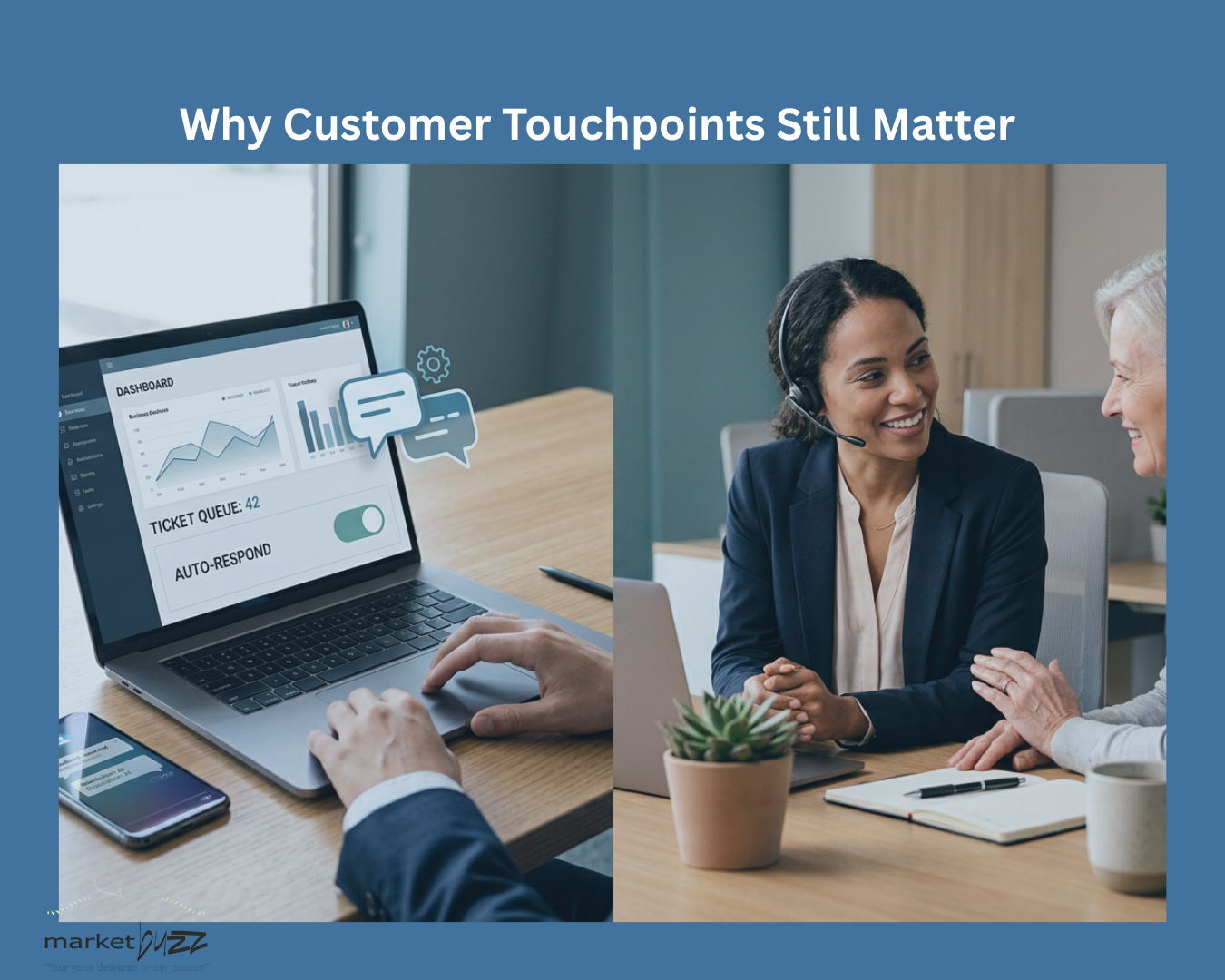
Automation can be a gift. It saves time, reduces repetitive work, and helps businesses respond faster. But when it starts replacing the customer touchpoints that make people feel seen, heard, and helped, it can quietly damage reputation.
That is the real issue. Not automation itself, but the way some businesses use it to remove the human moments that matter most.
We are now in a world where customers expect speed, but they still value care. They are happy to receive a confirmation email automatically. They are not happy to feel trapped in a chatbot loop when they need a real answer.
Touchpoints tell the real story
A business’s reputation is not built only through campaigns, websites, or polished announcements. It is also built in the smaller everyday moments: the reply to a query, the follow-up after a complaint, the tone of a support message, and the way a team handles escalation.
Those moments may seem operational, but they are reputational too. Customers do not separate “service” from “brand” nearly as neatly as businesses do.
If someone feels ignored, delayed, or passed from one automated system to another, they often remember the frustration more than the brand promise. That is why customer touchpoints deserve as much attention as the content in a PR plan.
What businesses often get wrong
One common mistake is automating everything that can be automated without asking whether it should be automated. That is where problems begin.
The right question is not, “Can this be automated?” The better question is, “Will automation improve this moment, or weaken it?” Some touchpoints are perfect for automation, such as reminders, confirmations, and status updates. Others need human judgement, empathy, or discretion, especially when a customer is upset or confused.
When those moments are handled badly, the business may think it is being efficient, but the customer experiences it as indifference. That is never good for trust.
Why YOU should care
This is where PR and reputation management come in. Good PR is not just about what a business says publicly. It is also about whether the business’s behaviour matches its promise across every channel and every interaction.
A strong reputation is built when the customer experience feels consistent. If the brand sounds warm and responsive on social media but cold and inaccessible in real life, the gap becomes visible very quickly.
That is why customer touchpoints should not sit only with operations or customer service. They are part of the reputation system. They tell the market what kind of business you really are.
A simple touchpoint audit
A useful next step is to audit your customer touchpoints. Not in a complicated way — just start by mapping where customers actually interact with your business.
Look at the full journey:
- First enquiry.
- Website forms.
- Auto-replies and confirmation emails.
- Chatbots and live chat.
- Social media responses.
- Review replies.
- Complaint handling.
- Follow-up after resolution.
Then ask a few honest questions:
- Does this touchpoint feel human enough?
- Does it solve the customer’s problem quickly?
- Does it show care as well as efficiency?
- If this were my only impression of the brand, would I trust it?
This kind of audit often reveals a simple truth: some automation helps the business look organised, but too much automation makes it feel distant.
A better balance
The goal is not to reject automation. The goal is to use it wisely. Let automation handle the repetitive work so your team has more time for the moments that need empathy, judgement, and relationship-building.
That balance is what customers notice. They may not describe it in technical terms, but they do feel the difference between a business that is efficient and one that is genuinely attentive.
And in reputation terms, that difference matters more than ever. Brands are not just judged by what they publish. They are judged by how they respond, how they listen, and how they make people feel at each point of contact.
Touchpoint
If automation is helping your business move faster, that is useful. But if it is causing you to miss the customer touchpoints that build trust, then it is costing you more than it saves.
A strong reputation does not come from sounding polished everywhere. It comes from being consistent, responsive, and human where it counts.
Take 20 minutes this week and audit your customer touchpoints. You may find that the biggest reputation opportunities are hiding in the smallest interactions.