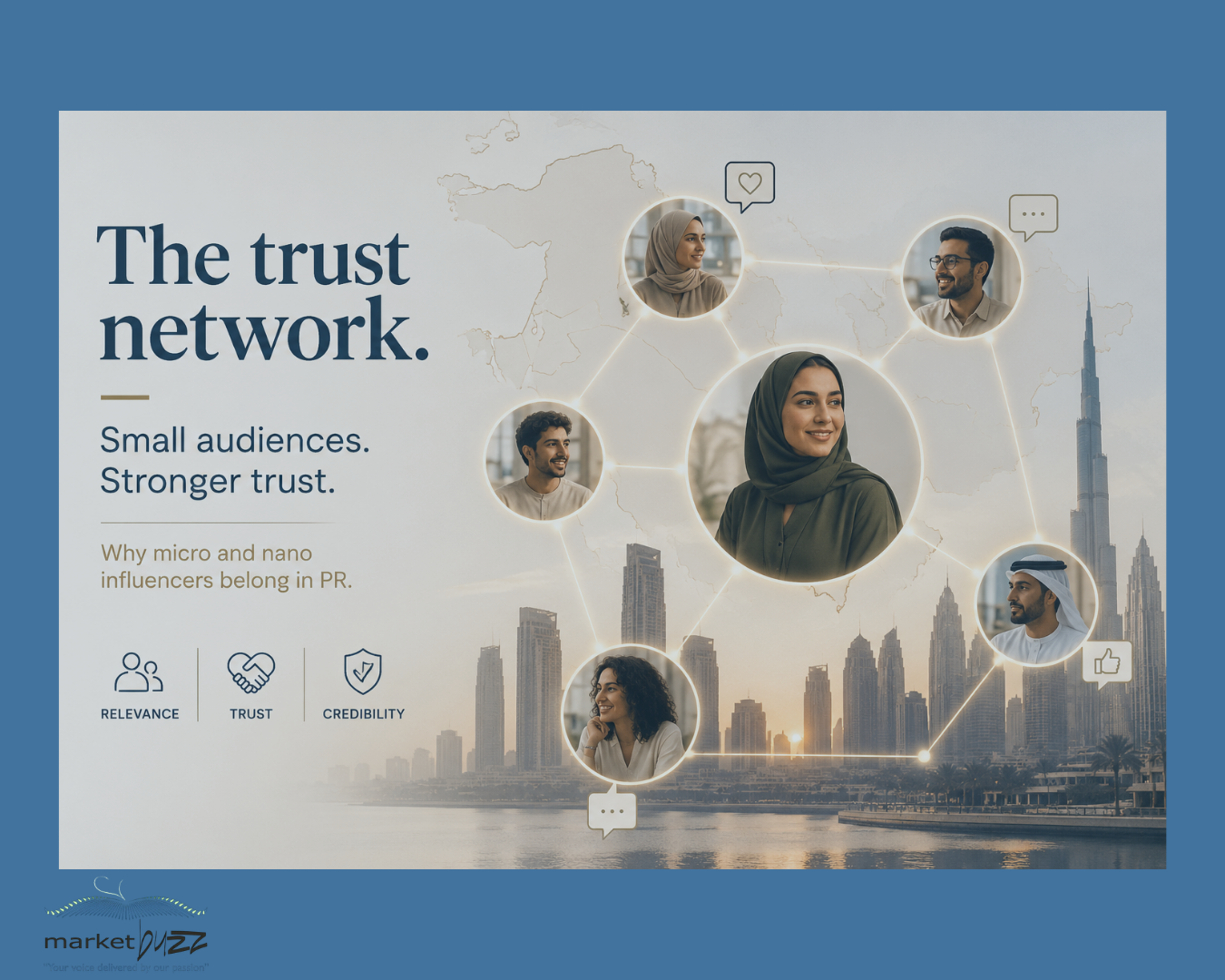
Not every influencer campaign needs a celebrity face, and not every brand needs a large creator budget. In many cases, micro and nano influencers can deliver better relevance, stronger trust, and more meaningful audience engagement than a bigger-name partnership.
For brands in the GCC and wider MENA region, the real question is not whether influencers are useful. It is whether the creator’s audience, tone, and credibility fit the reputation you are trying to build.
Why smaller creators matter
Micro and nano influencers usually have smaller audiences, but those audiences are often more engaged and more responsive. That makes them especially valuable for launches, niche products, local campaigns, and community-led brands that need trust as much as visibility.
This is where PR and creator marketing overlap. Audiences do not only see a post; they read it as a signal about the brand behind it, the kind of community it wants to reach, and how carefully it manages its public image.
That matters even more in the GCC, where effective communication depends on more than translation. Brands need cultural relevance, local awareness, and a message that reflects the people they are speaking to.
Where they fit
Micro and nano influencers belong in a PR plan when the goal is one or more of the following:
- Building credibility in a specific niche
- Reaching a local or culturally defined audience
- Supporting a product launch with social proof
- Strengthening community engagement
- Extending media and content visibility through trusted third parties
They are especially useful when a brand needs a more conversational, everyday voice rather than a polished campaign-style announcement. That makes them a natural fit for founder-led businesses, lifestyle brands, consumer services, education initiatives, and community activations.
What to look for
The best creator partnerships are not always the biggest ones. A good fit usually has four things: audience relevance, consistent content quality, clear values and tone, and real engagement, not just follower numbers. That thinking is reflected in the new MENA Influencer Marketing Guide, which introduces a standardized regional framework for influencer performance measurement, valuation, and pricing across MENA.
Before working with any creator, brands should look at the comments, the kinds of questions followers ask, and whether the creator’s content feels authentic over time. In reputation-sensitive markets, that authenticity matters as much as reach, especially when brands are trying to make informed decisions using clearer benchmarks rather than follower counts alone.
A useful test is simple: would this creator make the brand feel more credible, not just more visible? That remains the standard that matters most in PR, and it is exactly the kind of thinking the guide encourages through a more data-driven approach to influencer selection and evaluation.
What to avoid
A common mistake is choosing creators only because they are popular. Another is treating an influencer post as a one-off tactic with no connection to the wider PR story.
That approach often weakens results because the audience sees a disconnected promotion rather than part of a bigger message. If the creator does not understand the brand story, the partnership may still produce content, but it will not build the trust that PR depends on.
It is also risky to ignore regional context. In MENA, tone, relevance, and cultural awareness can matter just as much as the size of the following.
A smarter approach
The strongest influencer work starts with strategy. Ask what role the creator should play: awareness, credibility, community reach, or post-campaign reinforcement.
Then match the creator to the objective, brief them clearly, and make sure the partnership supports the same message the brand is using elsewhere in media, social, and owned channels. That is what turns creator marketing into a real PR asset rather than a separate activity.
A more structured approach is also becoming the norm. The region now has a standardized influencer marketing guide, which reinforces the need for clearer planning, measurement, and valuation across MENA campaigns.
Relevance beats reach
In MENA, smaller creators can offer something that larger accounts often cannot: closeness, relevance, and trust. When chosen carefully, they help brands feel more human, more local, and more believable.
The strongest influencer partnerships are rarely the loudest ones. They are the ones that fit the brand story, reflect the audience’s expectations, and strengthen reputation over time.
A useful way to judge the fit is to ask whether the partnership adds credibility, not just visibility. If the answer is yes, the creator is probably doing real PR work, not just generating content.
That is why the smartest brands look beyond follower counts and focus on audience trust, message alignment, and cultural relevance. In practice, that is often where the most effective campaigns begin.
Remember you can book a chat with us by reaching out to us.