
In many small and growing businesses, the founder is the most visible person in the company.
They speak at events, give media interviews, post on LinkedIn and maintain important relationships with customers, partners and journalists. This visibility can be a considerable advantage. It gives the business a human face and helps build trust.
But it can also create a dependency.
If people know the founder but know very little about the company’s wider leadership, expertise or capabilities, what happens when that founder becomes less visible?
They may want to focus on a new market, take an extended break or prepare the company for investment or succession. Sometimes, as we explored in last week’s communications continuity test, they may simply be unavailable when the business needs to respond.
The question is not whether the founder should disappear. It is whether the company’s credibility can continue without depending entirely on them.
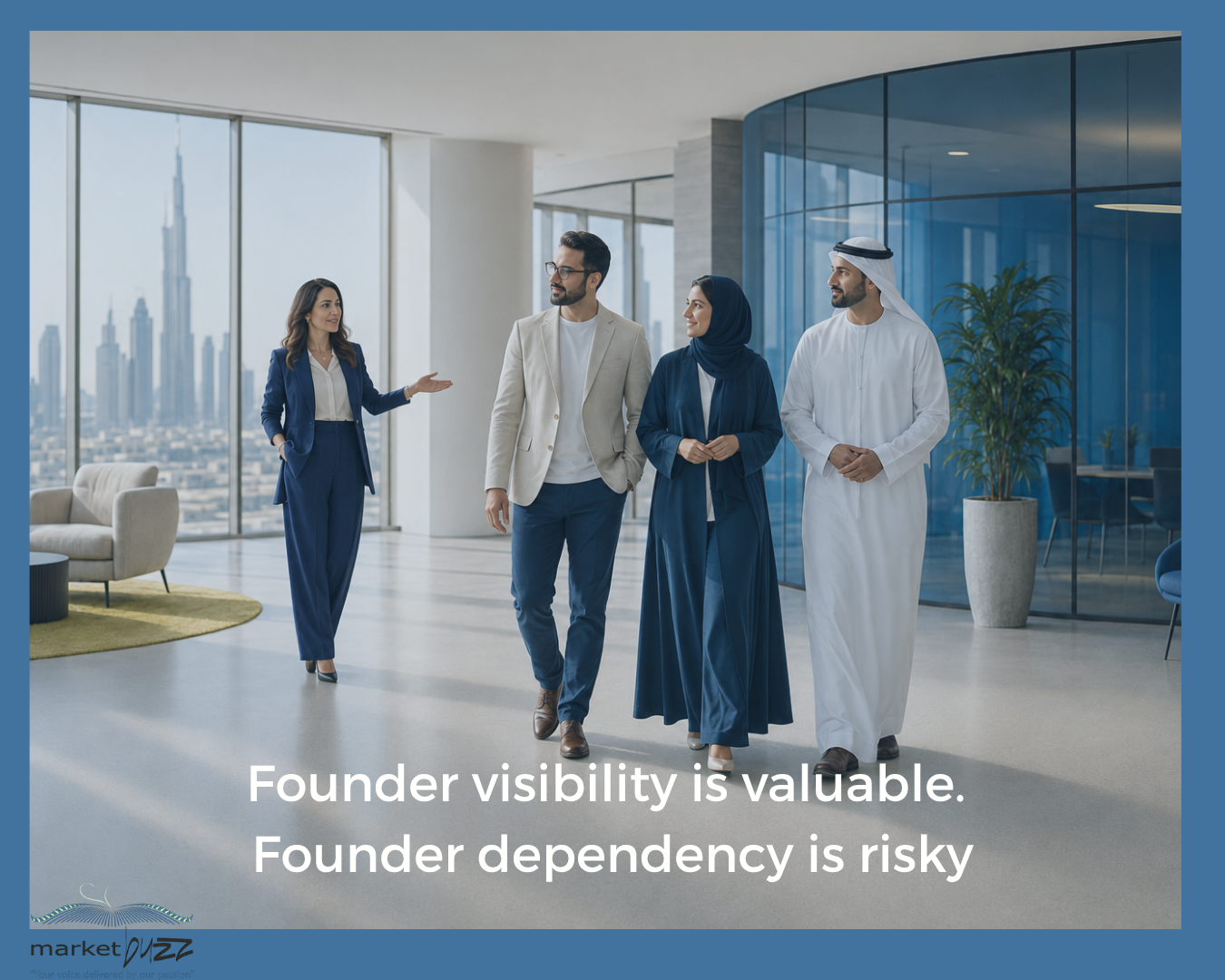
Founder visibility is valuable. Founder dependency is risky.
A strong founder profile can open doors. The problem comes when every interview request, speaking opportunity, customer relationship and informed opinion must come from the same person.
This creates a bottleneck. Opportunities may be missed because the founder is unavailable. Other leaders remain largely invisible, even when they have useful expertise. Customers and partners may also begin to question whether the business has enough depth beyond its founder.
This was one of the central themes in our recent Trust Factor workshop for TiE Dubai founders. In a young company, it is normal for much of the credibility to sit with the founder. The problem is that nobody always notices when some of that trust should start shifting towards the wider business.
The founder’s reputation and the company’s reputation are separate assets. They can strengthen each other, but one shouldn’t carry the other forever.
This matters commercially, particularly for founder-led and family businesses across the GCC. A company that wants to expand into new markets, attract investment or prepare the next generation of leadership needs trust to sit with the organisation, not only with one individual.
The 2026 Edelman Trust Barometer found that “my employer” remains the most trusted institution globally. Companies already have a wider base on which to build trust. The challenge is making the people, knowledge and capability within the business more visible.
Find the expertise that already exists
The answer is not to turn every senior employee into a “thought leader”. Visibility without substance won’t strengthen the brand.
Instead, identify two or three people who already have knowledge that customers, journalists or industry audiences would find useful.
A technical director might speak about changes in the sector. A head of customer experience could discuss changing customer expectations. A regional manager may understand the practical differences between doing business in the UAE, Saudi Arabia and other GCC markets.
Each person should have a clear area they can genuinely own. They don’t need to comment on everything. A narrower, credible area of expertise usually works better.
Build visibility gradually
New spokespeople don’t need to begin with a keynote speech or a major television interview.
They can contribute to a company article, provide a quote for a press release or join a panel discussion. They might write an occasional LinkedIn post based on something they have seen through their work. Over time, they can take on interviews, roundtables and more prominent speaking opportunities.
This builds confidence as well as credibility. It also allows the business to establish several recognisable voices without making the communication feel forced.
As we discussed in Internal Influencers: Your Brand’s Secret PR Weapon, employees can be credible advocates when they are supported properly. That means clear guidance, media training where needed and access to accurate company information.
Make the company part of every founder story
Founder visibility should always help people understand the business behind the person.
When the founder speaks, the story should also demonstrate the company’s team, customer results, systems and wider expertise. Other leaders should be introduced naturally, rather than appearing only when the founder is unavailable.
The aim is not to reduce the founder’s value. It is to make sure they are not carrying all of it.
Try a simple exercise. Write down one thing to fix, one claim you need to prove, and one piece of credibility you need to build. Then mark whether each action strengthens the founder, the company or both.
If every answer sits with the founder, you have identified the imbalance.
One final test is equally useful: if your founder stopped posting, speaking or giving interviews for three months, who else could represent the business credibly?
If the answer is no one, it is time to start building the next voices now.