Before a buyer replies to your proposal, a journalist agrees to an interview or a potential partner accepts a meeting, they will probably check your business online. They may look at your website, search for the founder, check the company licence, scan reviews and compare the information they find across different platforms.
This is not necessarily a sign of distrust. It is basic due diligence.
For many small businesses in the GCC, the problem is not that people find something negative. It is that they find very little reliable information, or the details do not match. An active Instagram account and a WhatsApp number may be enough to start a conversation. They are rarely enough to support an important business decision.
Verification is different from visibility
Building founder credibility through useful content and informed opinions also depends on something more basic. Can people confirm that your business exists, is active and is professionally run?
A prospective client should not have to piece together your story from an Instagram bio, an outdated LinkedIn page and a trade licence bearing a slightly different company name.
Every unanswered question creates friction. If another supplier is easier to check, that business may appear to be the safer choice, even if its service is no better.
Start with a proper business base
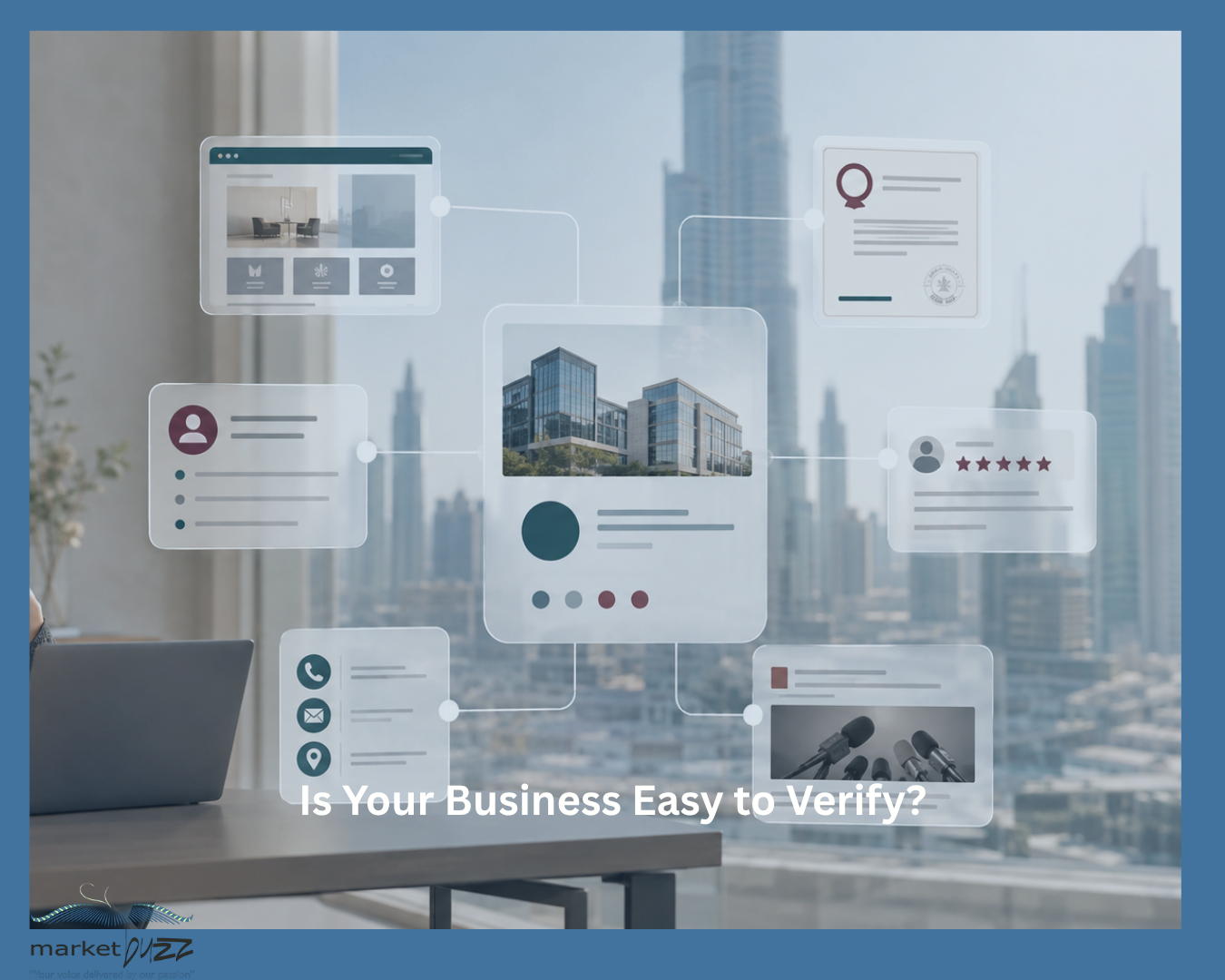
Your website does not need to be expensive or complicated. It does need to make several things clear:
- What the business does
- Who it serves
- Where it operates
- Who leads it
- How someone can contact it
The information should be current. Broken links, services that are no longer offered or contact details that do not work suggest that nobody is paying attention.
Use an email address connected to your company domain rather than a personal Gmail or Yahoo address. It is a small detail, but it helps demonstrate that the business has invested in a professional identity.
If your trading name is different from your registered company name, explain the connection where appropriate.
Make the leadership visible
People want to know who is behind a smaller business, particularly when they are considering a sizeable purchase, partnership or contract.
The founder or senior leadership team should be visible on the website and have current LinkedIn profiles. Their job titles, company descriptions and areas of expertise should be consistent with the information published elsewhere.
This does not require lengthy biographies. A clear photograph and a short summary of relevant experience are usually enough.
A completely invisible leadership team can raise unnecessary questions. So can profiles that have not been updated for several years.
Check your official information
Businesses in the UAE, for example, can be checked through official government services. The UAE Government provides links for checking business licences, registered names and activities. Dubai companies can also be searched through the Invest in Dubai licence directory.
Search for your own company as a potential client might. Does the registered activity reflect what you offer? Is the licence current? Is the spelling of the company name consistent across your website, proposals, invoices and social media profiles?
If you hold regulatory approvals, industry certifications or professional memberships, show them where relevant. Make sure they are current and explain what they mean. A row of unexplained logos does little to help someone assess the business.
Add proof beyond your own claims
Saying that your business is trusted, experienced or a market leader is still a claim made by the business itself. Independent evidence carries more weight.
Useful proof may include:
- Detailed and credible customer reviews
- Media coverage
- Approved customer stories
- Listings on vendor or partner websites
- Recognised awards
- Professional memberships and accreditations
As we explained in last week’s post, commercial proof does not always require you to disclose confidential client information. An approved unnamed case study can still explain the challenge, the work undertaken and the result.
Run a ten-minute verification audit
Open a private browser window and search for your company name and the names of its founders.
Then ask:
- Is there a working website with clear company information?
- Does the business use a domain email address?
- Are the company name, location and contact details consistent?
- Can people identify who owns or leads the business?
- Are licences, certifications and memberships current?
- Are reviews visible, recent and answered appropriately?
- Is there independent evidence supporting the company’s claims?
- Can someone understand what the business does without contacting you first?
Good PR can bring a buyer, journalist or potential partner to your business. But before they respond, they need to feel confident that what they have found adds up.
Make your business easy to check and easier to trust.