January is often treated as a soft reset. In reality, it is one of the most strategic moments of the year for communications. Budgets are fresh, editorial calendars are open, and teams are more receptive to conversations about priorities and positioning.
For businesses operating in the Middle East, 2026 brings an added layer of complexity. Faster news cycles, AI-enabled content, more fragmented audiences and a region that continues to evolve culturally and economically. A PR strategy that worked even 12 months ago will likely need recalibration.
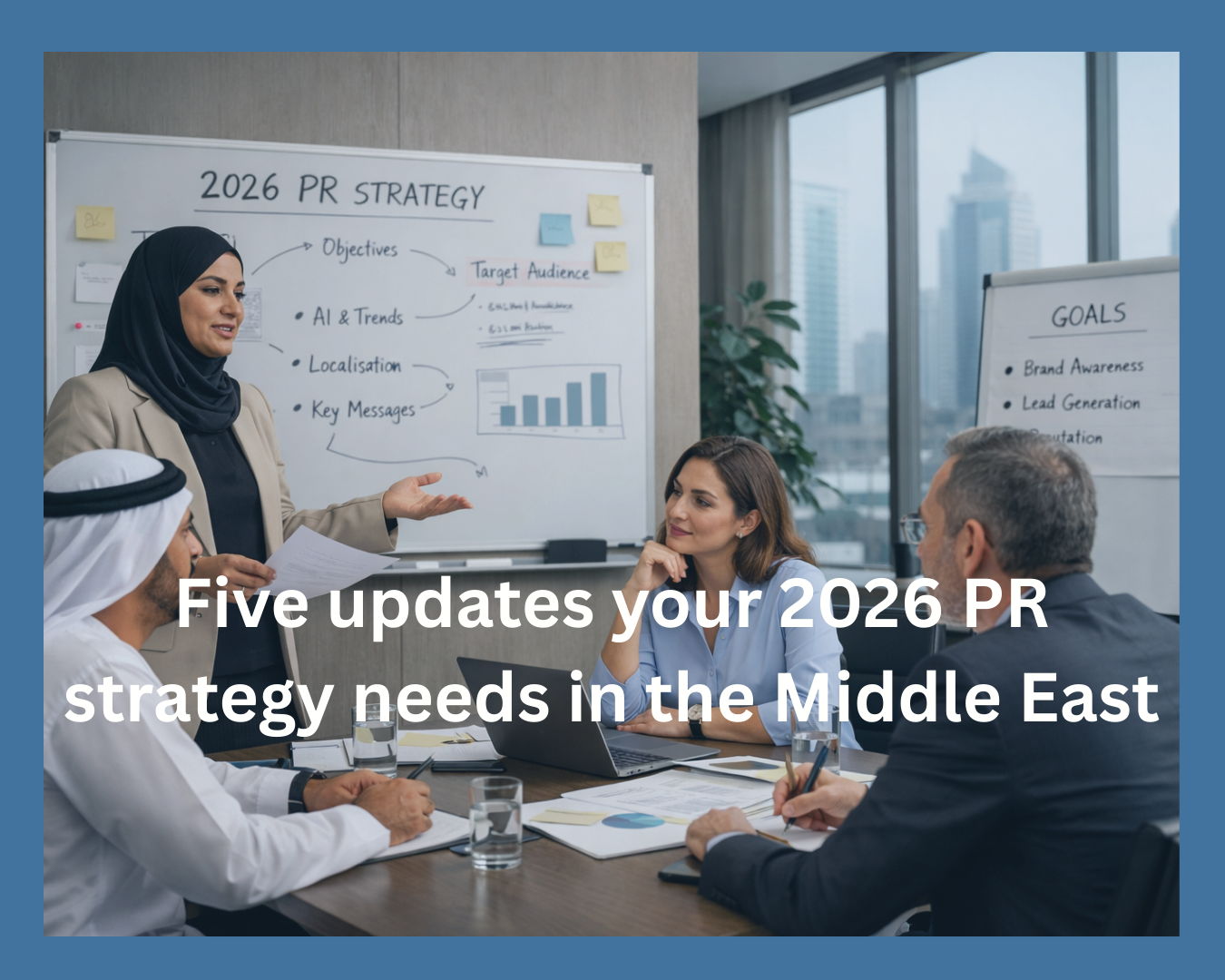
Here are five updates worth building into your PR strategy as the year begins.
- Shift from activity-led PR to outcome-led PR
Many SMEs still plan PR around outputs: press releases sent, interviews secured, posts published. In 2026, that approach is increasingly limiting.
PR strategies need to start with outcomes. What should visibility actually support this year? Pipeline growth, investor confidence, employer branding, trust in leadership, or market entry credibility.
This shift is echoed across global trend reports, which consistently point to leadership teams asking tougher questions about impact rather than volume. The strongest PR plans now map stories directly to business priorities, not just media moments.
The practical update here is simple. Before finalising your calendar, define what success looks like beyond coverage, and let that guide story selection.
- Design for AI-shaped visibility, not just traditional coverage
AI is already influencing how stories are surfaced, summarised and discovered. Search behaviour is changing, and content that is clear, structured and authoritative is more likely to be referenced, reused and trusted.
This does not mean chasing every new platform. It means ensuring your owned content, expert commentary and media narratives are consistent, quotable and easy to understand.
PR teams are increasingly working alongside SEO and content teams to ensure brand narratives show up accurately in AI-driven environments. This is not a future concern. It is a 2026 reality highlighted across multiple PR trend forecasts.
Updating your strategy here may involve tightening key messages, investing more in explainers and thought leadership, and paying closer attention to how your brand is described across channels.
- Build localisation in from the start, not as a final layer
The Middle East is not one audience. It is multilingual, multicultural and shaped by national priorities that differ across markets.
In 2026, localisation is less about translation and more about relevance. That includes tone, timing, imagery, spokesperson selection and cultural sensitivity. It also means understanding how different communities consume news and content, particularly across the GCC.
Regional media analysis shows a continued shift towards shorter formats, stronger local angles and stories that connect to national development narratives. PR strategies that treat the region as a single block risk sounding generic or out of touch.
An effective update here is to plan regional variations at the strategy stage rather than retrofitting later.
- Treat owned channels as core PR assets, not support tools
Blogs, newsletters and LinkedIn are no longer secondary to media relations. For many SMEs, they are the foundation of consistent visibility.
Owned channels allow brands to control narrative, demonstrate expertise and build trust over time. They also provide journalists with context, proof points and background when evaluating a story.
Your 2026 PR plan should clearly define how owned content supports earned media, not compete with it. A strong blog, for example, often becomes the source material for interviews, opinion pieces and speaking opportunities.
This integrated approach is increasingly recommended across editorial calendars and PR planning frameworks globally.
- Plan for consistency, not campaigns
Campaign-based PR still has its place, particularly around launches or milestones. But in 2026, consistency is what builds credibility.
Journalists, partners and audiences respond to brands that show up regularly with clear points of view. That requires realistic planning, internal alignment and a rhythm that your team can sustain.
The most effective PR strategies now resemble narrative platforms rather than one-off pushes. They allow flexibility while keeping the core story intact.
As you plan January and beyond, the question to ask is not how many campaigns you can run, but how consistently you can communicate with purpose.
Final thought
A strong PR strategy in the Middle East today is less about prediction and more about preparation. January is your opportunity to set that foundation calmly and deliberately, before the pace accelerates.
If your strategy feels clear, focused and achievable now, it is far more likely to deliver meaningful results by mid-year.