
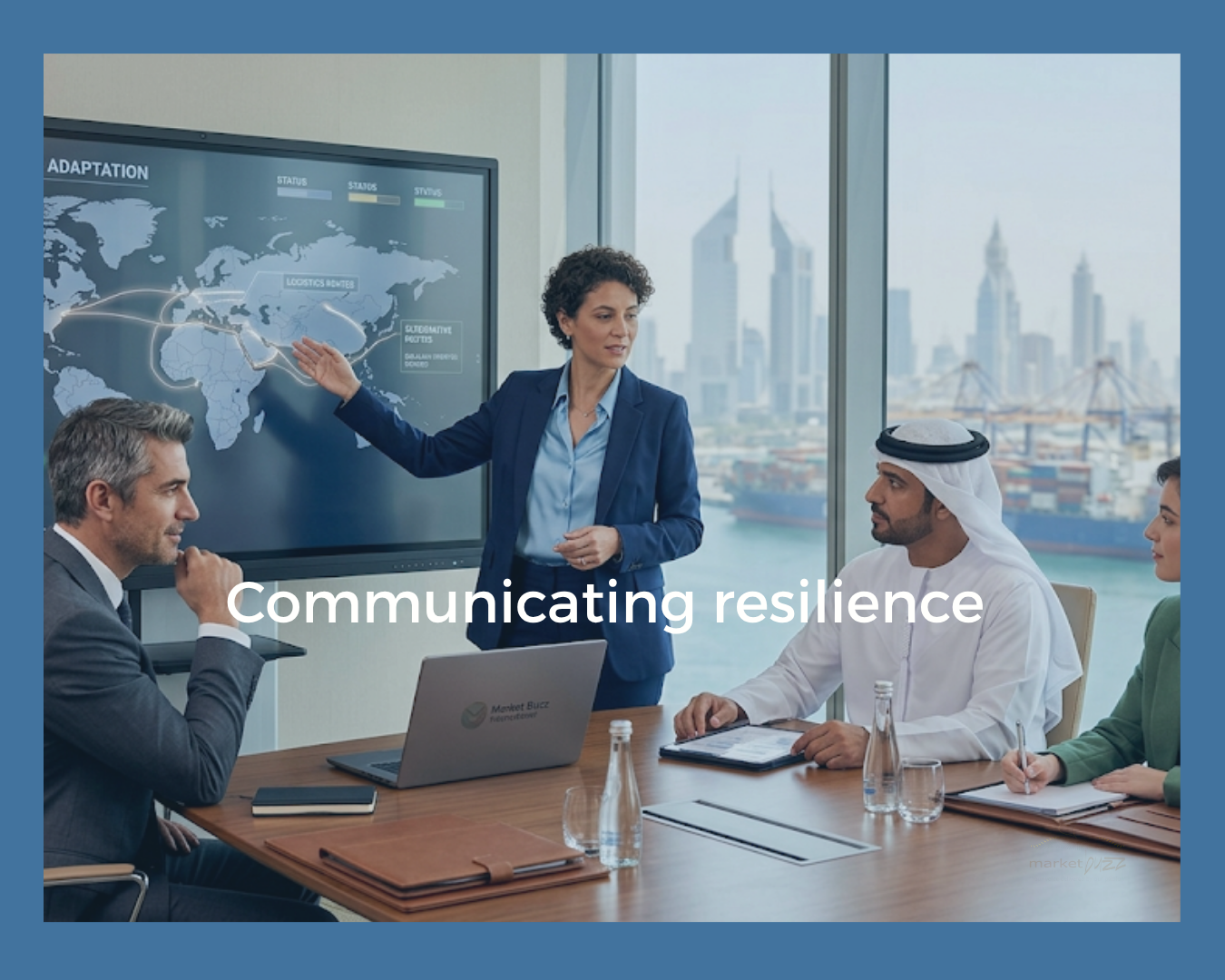
The current landscape of Middle Eastern logistics is defined by constant adaptation. While maritime and air cargo rates fluctuate due to regional disruptions, the challenge for business leaders is not just managing the physical movement of goods, but managing the narrative surrounding those delays.
For most businesses, supply chain issues are no longer back-office concerns; they are frontline communication priorities. Stakeholders, from investors to end consumers, are looking for more than just technical status updates. They require a narrative of resilience and clear evidence of proactive problem-solving.
Beyond the Status Update
When disruptions occur, the instinct for many businesses is to provide data-heavy reports or reactive notifications. However, true communication leadership involves shifting the focus from the problem to the strategic solution. Instead of detailing the specific mechanics of a delay, focus on the alternative routes being secured and the partnerships being leveraged to maintain business continuity.
By framing these challenges within a broader strategy of agility, a company demonstrates its strength. This approach builds trust by showing that the organisation is not merely a passenger to global logistics trends but an active navigator of them.
Strategic Transparency
Digital channels, particularly professional platforms like LinkedIn, have become the primary space for discussing topics like supply chain health. For a COO or Managing Director, these platforms offer a way to discuss business continuity without causing unnecessary alarm. The goal is to project calm authority.
Effective communication in this context involves sharing insights on regional logistics context rather than just internal company news. By discussing how your organisation is adapting to wider market shifts such as near-shoring or multimodal transport shifts, you position your brand as an informed industry player.
Communication Continuity
To maintain credibility during logistics uncertainty, businesses should consider the following approaches to their messaging:
- Prioritise Narrative Over Specs: Explain what a logistics shift means for the customer’s delivery timeline or service quality, rather than focusing solely on shipping lane technicalities.
- Focus on Outcomes: Highlight the steps taken to mitigate impact, ensuring the conversation remains centered on the reliability of the end result.
- Maintain a Consistent Presence: Regular, measured updates are more effective than silence followed by a crisis announcement. Consistency reinforces a sense of control.
In a region where logistics is the backbone of trade, clear and intentional communication is the most effective tool for protecting a brand’s reputation. By focusing on value-led storytelling, businesses can turn a logistical hurdle into an opportunity to demonstrate expertise and reliability.