AI can help a business draft a press release, prepare a social post or turn a spokesperson’s notes into an article. The words may be clear. The structure may be polished.
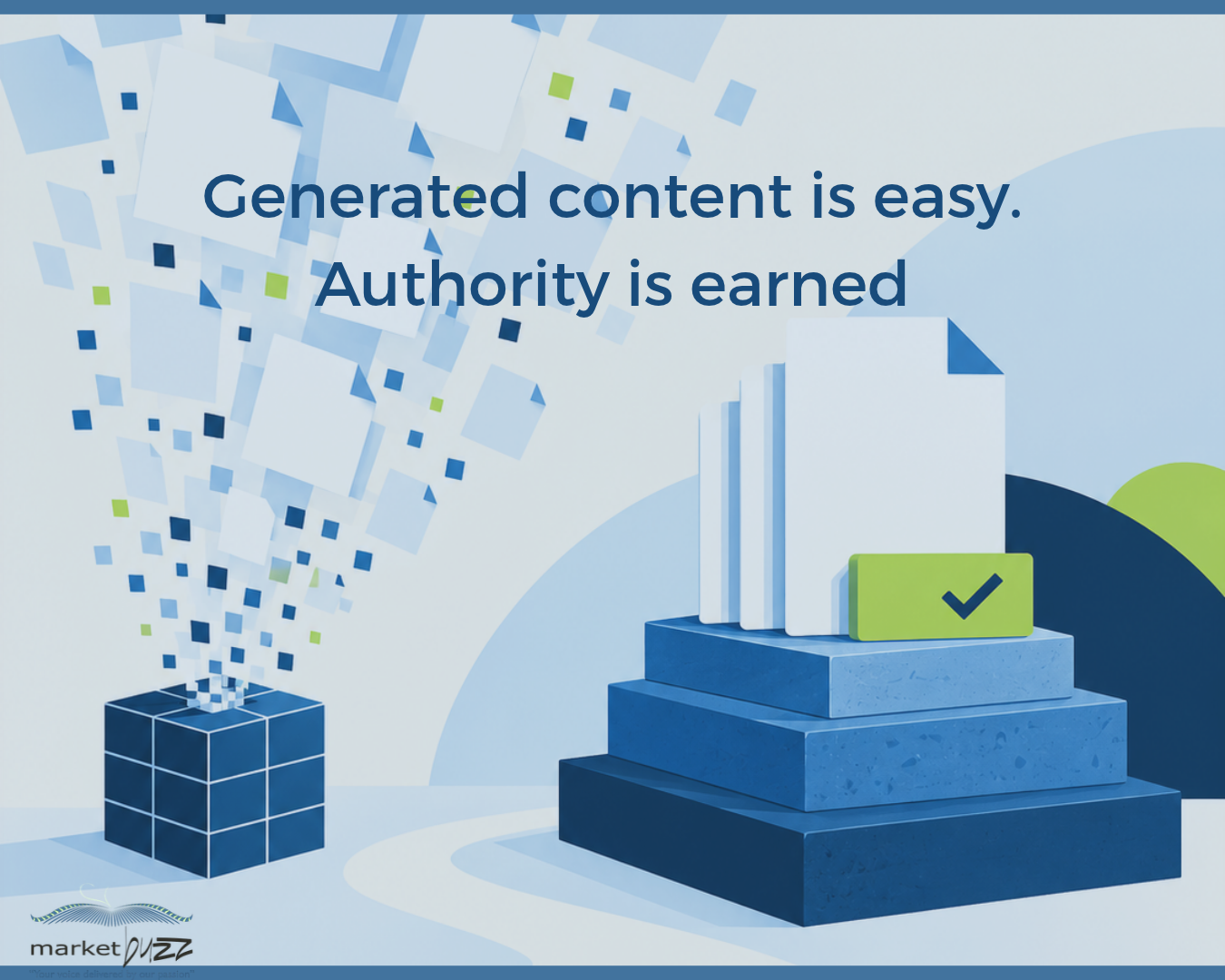
But polished content does not automatically make a business an authority.
Authority is earned when people have a reason to believe what you say. That might be direct experience, evidence behind a claim, a useful point of view or a record of doing what you say you do. AI can help communicate those things. It cannot supply them.
That distinction matters in public relations. A company can publish regularly and still have little to say that is useful or credible. It can produce expert commentary without showing why its spokesperson is qualified to give it. And it can make a claim sound convincing without being able to prove it.
The risk is not simply that AI-written content sounds generic. It is that speed and volume can make unsupported claims easier to publish. In its 2025 survey of more than 3,000 journalists across 19 markets, Cision found that 72% were concerned about factual errors in AI-generated PR content. The same report found that 86% would reject a pitch unrelated to their beat or audience. Accuracy and relevance still matter.
There is a regional dimension, too. A 2025 YouGov study reported that 62% of UAE residents surveyed were as likely, or more likely, to trust AI-generated news than human-generated news. That does not tell us how people judge every business claim. It does suggest that audiences’ relationship with AI content is more varied than a simple “people don’t trust it” assumption. For communicators, the useful question is whether the information is accurate, clear and supported.
A practical test is to look at the substance behind the words:
- Does the spokesperson have first-hand experience of the issue?
- Can the business show evidence for its claims?
- Is there a clear point of view, or only a polished summary of what others have said?
- Does the message reflect the market and audience it is meant for?
- Is someone prepared to stand behind it and answer questions?
This is particularly important across the GCC, where the same broad message may need different examples, proof points or spokespeople in different markets. AI can help adapt wording. It cannot decide whether the adaptation is accurate or appropriate.
Communicators also need to be careful about how they measure authority. Being mentioned by an AI tool may be interesting, but it is not proof of trust or influence. AMEC’s 2026 guidance on measuring generative engine optimisation recommends looking at the wider information environment, including earned media, expert commentary, reviews and owned content. It also says AI results vary by platform, query and time, so they should be treated as directional evidence.
For a small business, the next step is straightforward. Use AI to help organise your thinking, draft or adapt material. Then check whether the communication reflects something the business genuinely knows, can prove and is willing to stand behind.
AI can make content faster to produce. Authority still depends on what sits behind it.