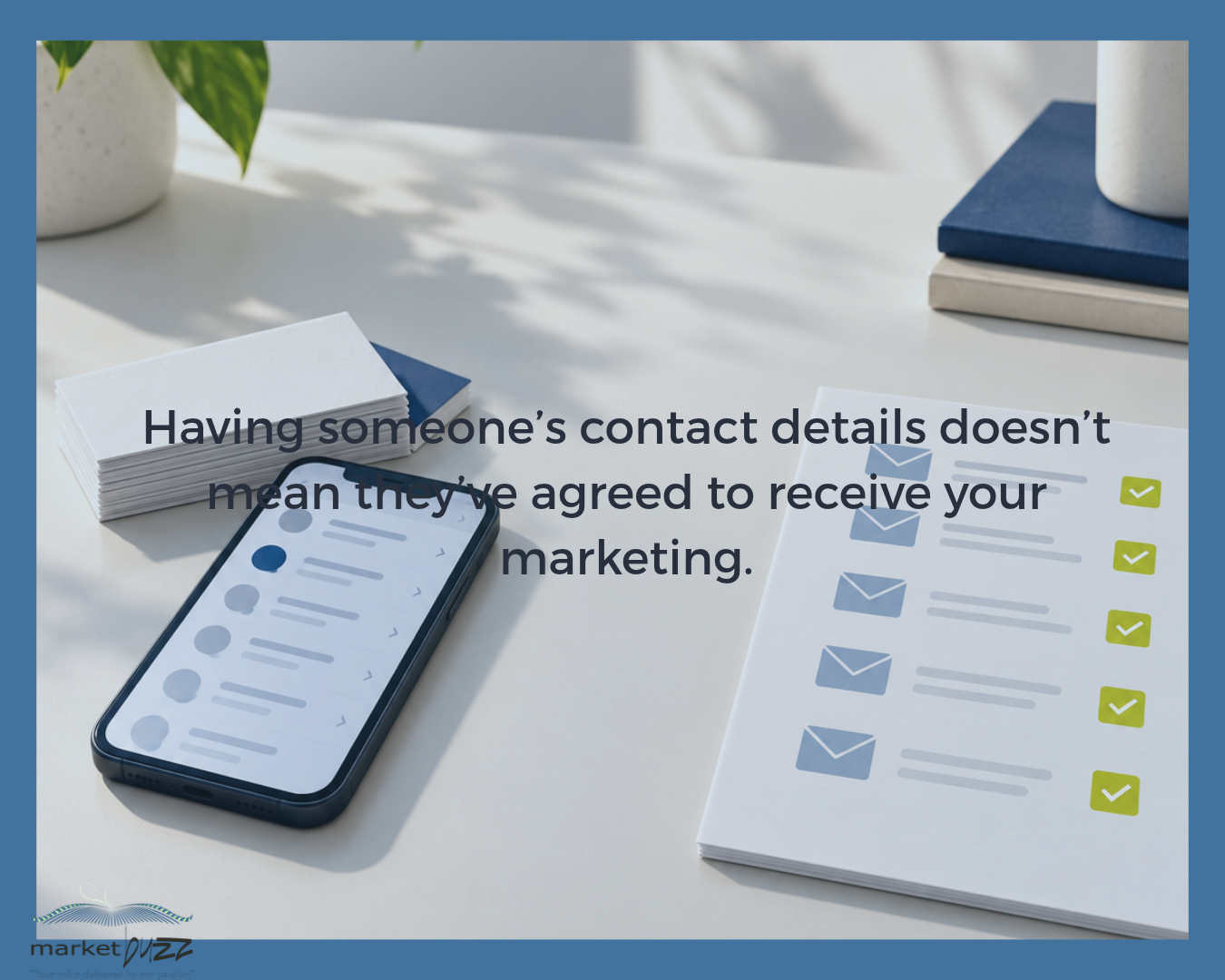
You meet someone at an event and exchange business cards. A customer gives your team a mobile number to arrange a delivery. Someone messages you on WhatsApp with a question.
A few weeks later, all three receive your newsletter.
It may seem like a small step. From their point of view, you have used a conversation about one thing as permission for something else. That is where a contact list can become a PR problem.
Why this affects your reputation
PR is about the relationship people have with your business, not just what appears in the media. An unwanted message can make someone question how carefully you handle their information. They may unsubscribe, complain or simply decide they no longer want to hear from you.
That is particularly damaging when the message itself talks about trust, customer care or putting people first. Your actions need to support your words.
None of this means you should stop using newsletters or WhatsApp. Direct communication can be one of the most useful parts of your PR mix. It lets you share ideas, explain what your business is doing and stay in touch with people who want to hear from you. The question is whether they expected that contact.
How did the person get onto your list?
Someone who signed up for your newsletter has made a clear choice. A customer who shared a number for a delivery may only expect a delivery update. Exchanging business cards may open the door to a relevant follow-up, but it does not automatically make either person a newsletter subscriber.
The distinction matters for businesses communicating across the UAE and Saudi Arabia. Saudi Arabia’s Personal Data Protection Law addresses the use of personal data for marketing. The UAE’s data protection framework gives people rights over the use of their information, including the right to stop its use for direct marketing. Check the requirements that apply to your business and where you are sending messages.
There is a practical test too: if the person asked why they received this message, could your team give them a clear answer?
Give people a genuine choice
Start by recording where each contact came from, when their details were collected, what they agreed to receive and whether they chose email, WhatsApp or both. Keep service contacts separate from marketing subscribers.
Be specific when inviting people to sign up. “We’ll send you our weekly PR tips by email” is easier to understand than “We’ll keep in touch.” If you plan to send event invitations as well, say so.
Make it easy to opt out and ensure the request reaches everyone who manages your communications. There is little point removing someone from an email list if a colleague adds them to a WhatsApp broadcast the following week. Give one person responsibility for maintaining the records and reviewing the lists.
A smaller list of people who have chosen to hear from you is more valuable than a large one built from every contact your business has collected. It gives your messages a better chance of being welcomed, and it shows that your business treats people with the same care it claims to offer.