
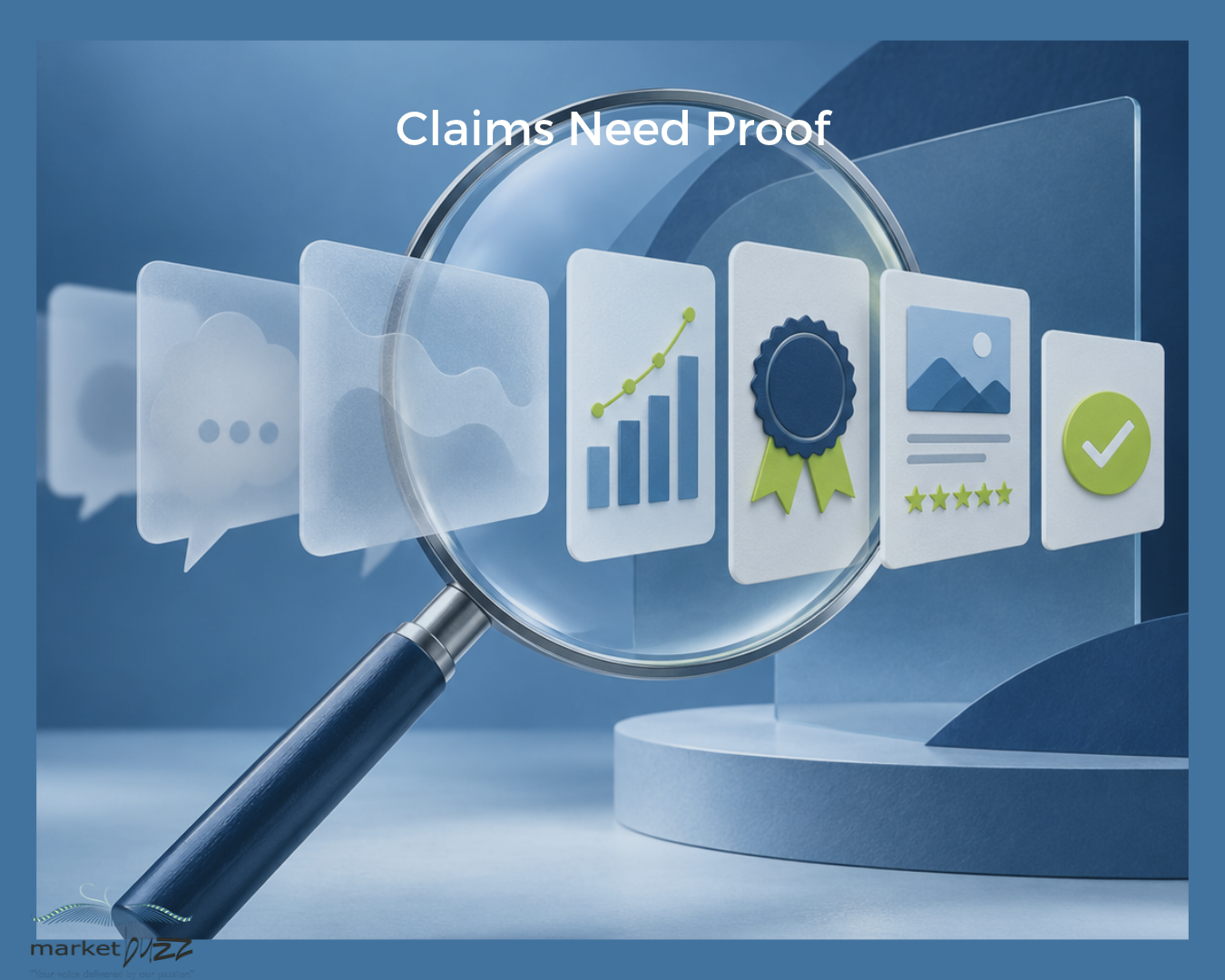
Most business websites contain the same familiar words: Innovative. Sustainable. Trusted. Leading. Customer-focused.
They sound positive, but what do they actually tell a potential customer, journalist or business partner? Very little, unless the business can prove them.
Repeating a claim does not turn it into evidence. In fact, using broad language without anything to support it can create more doubt than confidence.
Trust now has to be earned
The 2026 Edelman Trust Barometer found that seven in ten people globally are unwilling or hesitant to trust someone with different values, facts, approaches or cultural backgrounds.
That wider climate matters to businesses. People are more careful about what they believe and who they trust. They can also check claims quickly by searching online, reading reviews, looking at company profiles and comparing information across different sources.
This is particularly relevant in the GCC, where businesses often need to establish credibility with customers, partners and media across several markets. A strong claim may attract attention, but clear evidence helps someone decide whether to believe it.
As we discussed previously, your business must be easy to verify. The next question is whether the claims people find stand up to scrutiny.
What counts as evidence?
The right evidence depends on the claim.
If you describe the business as experienced, show how long it has operated, the sectors it has worked in or the depth of the leadership team’s expertise.
If you say you are customer-focused, use specific customer stories, retention figures, service standards or examples of how feedback changed something.
If you claim to be innovative, explain what is new. Is it a product, process, business model or application? What problem does it solve, and what changed as a result?
Sustainability claims need particular care. Saying that a product or business is “green” or “environmentally friendly” is not enough. Explain what has been measured, what has improved, over what period and according to which recognised standard.
Testimonials can help, but the strongest ones go beyond empty praise. “Excellent service” is pleasant to read. A short customer story explaining the problem, the work and the result is far more useful.
Run the evidence test
Choose one important page on your website. It could be your home page, About page or the page describing your main service.
Read it line by line and highlight every claim you make.
For each one, ask:
- What evidence supports this?
- Where can the reader find that evidence?
- Is it current, specific and credible?
- Could someone outside the business understand it?
If the evidence exists but is not visible, add it. This might mean including a number, linking to a case study, naming a certification, explaining a process or adding an approved customer example.
If the claim is true but too broad, make it more precise. “We offer outstanding customer service” could become “Client enquiries are answered within one working day.”
If you cannot support the wording, remove it.
Proof is part of reputation management
PR can help a business communicate its strengths. It cannot manufacture proof that does not exist.
In my Trust Factor workshop for TiE Dubai, I looked at how founders can build and protect reputation. A large part of that work happens before any press release, interview or campaign. It comes from making sure that what the business says matches what it can demonstrate.
Evidence does not make your communications dull. It makes them believable.
And in a low-trust environment, believable is far more valuable than impressive.