
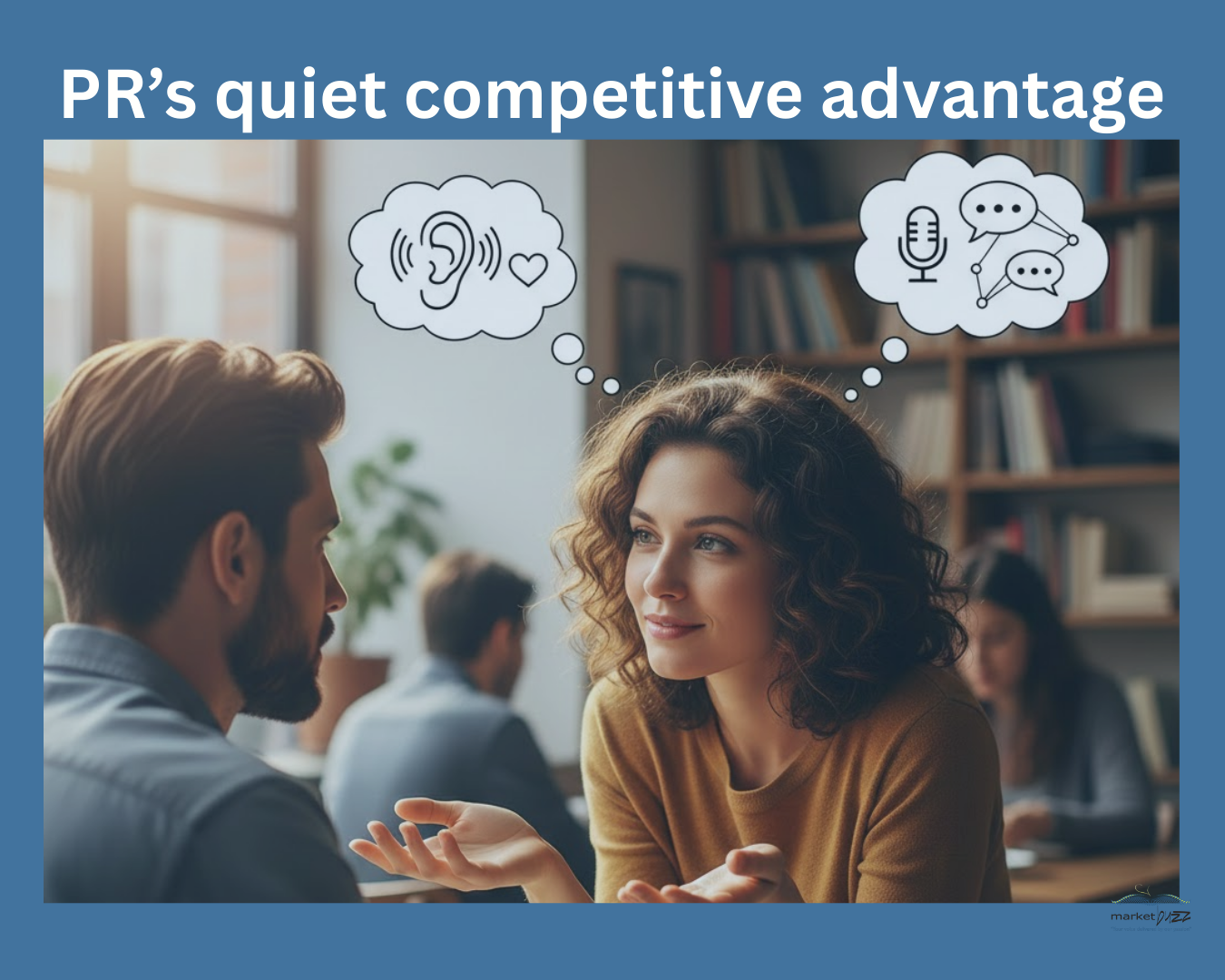
Most PR problems don’t start with poor messaging. They start with missed signals.
In 2026, the brands that perform best in PR are not necessarily producing more content or pitching more stories. They are paying closer attention to what is already being said around them, by customers, journalists, employees, and partners, and letting that insight shape their next move.
Listening has shifted from a “good communications habit” to a competitive advantage.
This is partly driven by how fast sentiment now travels. Conversations move quickly across media, social platforms, private channels, and offline spaces like events and communities. By the time a formal issue appears, the early warning signs have usually been there for weeks. Brands that are tuned in spot these patterns early. Those that are not end up reacting publicly, and often defensively.
Recent PR trend research highlights this shift clearly. Global outlooks for 2025 and beyond point to a move away from campaign-led communications towards insight-led strategies, where understanding audience behaviour, expectations, and concerns informs everything from content planning to crisis readiness. Listening is no longer a separate function. It is part of strategy.
For SMEs, this matters even more than for large corporates. Smaller teams rarely have the luxury of wasted effort. When PR is guided by real insight, it becomes more efficient. Stories land better, spokespersons feel more prepared, and campaigns feel relevant rather than forced.
In practical terms, listening today goes beyond monitoring mentions or pulling sentiment scores. It means actively analysing questions raised during sales calls, themes that come up repeatedly in customer conversations, and the angles journalists push back on during interviews. These signals often reveal what audiences actually care about, not what brands assume they care about.
There is also a strong trust element. Research consistently shows that audiences respond better to organisations that demonstrate understanding before response. In PR, this shows up as messaging that feels grounded and timely, rather than reactive or promotional. Listening creates the space to respond with context, which is increasingly what stakeholders expect.
In the Middle East, listening also supports better localisation. Diverse markets, mixed demographics, and different cultural sensitivities mean that tone and timing matter as much as content. What resonates in one market may fall flat in another. Listening helps PR teams adapt narratives without losing consistency or credibility.
Perhaps most importantly, listening changes how PR success is measured. Instead of focusing only on output, number of releases, coverage volume, or posts published, it encourages teams to ask better questions. Are we addressing the issues people are actually raising? Are we anticipating concerns, or only responding once they escalate? Are our stories shaped by insight, or habit?
When listening becomes part of everyday PR practice, the work becomes calmer and more confident. Messaging is clearer, interviews feel less combative, and campaigns gain traction faster because they are built on understanding, not assumption.
Listening may still be quiet work. But in a crowded communications landscape, it is increasingly the work that makes everything else perform better.