
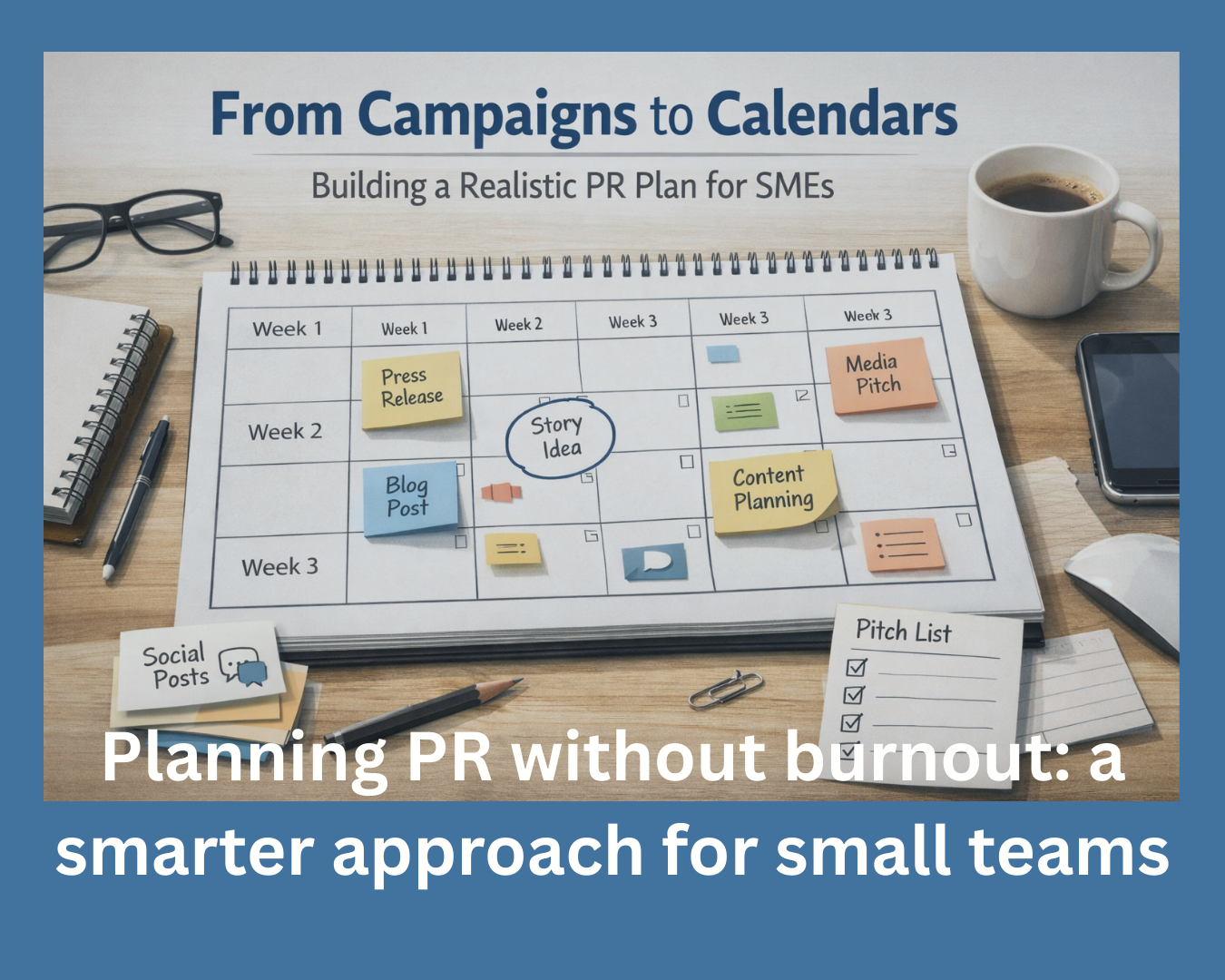
For many small businesses, PR still shows up in bursts. A product launch here. An event there. A flurry of activity followed by long stretches of silence.
It is because PR is treated as something you switch on when you need attention, rather than something that quietly supports the business all year.
We explored how multi-channel PR campaigns work best when they start with a strong central story and are adapted across media, content and platforms. That approach builds reach and consistency. But campaigns on their own are not enough. What SMEs really need is a way to sustain that momentum without exhausting their teams or budgets.
That is where a realistic PR calendar comes in.
Not the kind that looks impressive in January and quietly gets abandoned by February. But a living, flexible plan that reflects how small businesses actually operate.
Why campaigns often fall short
Campaigns are powerful. They give PR focus and urgency. They create moments journalists can work with. The problem starts when those moments are isolated.
When PR only happens in campaigns, everything in between feels unclear. Media relationships go quiet. Messaging starts to drift. Content becomes reactive. PR slips down the priority list until the next “big moment” appears.
Over time, this stop-start approach makes PR feel harder than it needs to be. Not because the stories are weak, but because there is no connective tissue holding them together.
A calendar provides that connection.
What a PR calendar actually does
A good PR calendar is not about filling every week with activity. It is about giving structure to your thinking.
It helps you see how your stories unfold across the year, how campaigns sit alongside quieter thought-leadership moments, and how PR aligns with the reality of your business rather than fighting against it.
Editorial calendars used by newsrooms work in exactly this way. They do not plan headlines months in advance. They plan themes, angles and opportunities. Resources like Brandpoint’s 2026 editorial calendar are useful not because SMEs should follow every awareness day, but because they show how broad themes can anchor consistent storytelling over time.
For small teams, that shift in mindset is crucial. PR becomes less about reacting and more about anticipating.
Less is almost always more
One of the most common planning mistakes SMEs make is overestimating how much PR they need to do.
A realistic calendar usually starts with fewer stories than expected. One strong campaign per quarter. One supporting story per month. Light, consistent content in between that reinforces the same messages rather than introducing new ones. Build your own calendar for your business for the (Middle East) region.
This level of focus creates repetition, which is often underestimated in PR. Audiences, journalists included, need to hear variations of the same story multiple times before it truly lands. Relevance comes from clarity, not constant novelty.
Let business reality shape the plan
A PR calendar should reflect how your business actually runs, not an idealised version of productivity.
Some months are operationally intense. Others lend themselves better to reflection, commentary or long-form content. In the Middle East, seasonal rhythms matter even more. Ramadan, Eid, summer slowdowns and regional event cycles all affect attention, availability and media appetite.
When PR planning accounts for these realities, it feels more natural. Stories land better because they respect context rather than competing with it.
Not everything needs to be a media pitch
One of the reasons PR calendars fail is because every entry is treated as a media moment. That puts unnecessary pressure on the plan and on the team executing it.
In practice, a healthy calendar balances different types of visibility. Some moments are designed for media outreach. Others are better suited to blogs, newsletters or LinkedIn (or any other owned media). Some are simply about maintaining relationships with journalists, partners or communities without asking for coverage at all.
When each piece plays a clear role, PR feels less transactional and far more sustainable.
Build structure, not rigidity
A calendar should guide decisions, not lock you into them.
The most useful plans leave room for the unexpected. Industry news you can comment on. A partnership that moves faster than expected. A client story that suddenly becomes relevant.
When those opportunities arise, having a calendar means you already know what you stand for and how a new story fits into the bigger picture. That is when PR stops feeling reactive and starts supporting growth.
Turning planning into habit
For SMEs, the most effective PR calendars are often simple. A shared document. A spreadsheet. Something visible enough to prompt regular conversation.
What matters is not how polished it looks, but how consistently it is used.
Campaigns create spikes in attention. Calendars create continuity. When the two work together, PR becomes more manageable, more measurable and far more realistic for small teams trying to build long-term credibility.